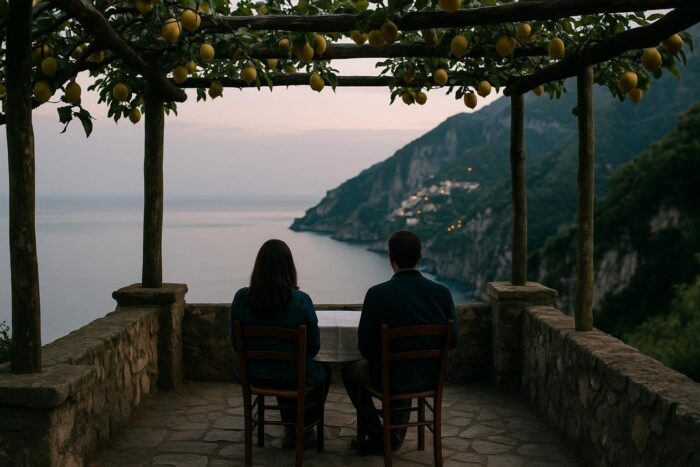
An Amalfi Coast honeymoon is built on a simple pleasure: waking up above the sea. Pastel towns cling to the cliffs of the Sorrentine Peninsula, lemon terraces climb the slopes, and evenings are made for long dinners while the lights come on along the shore.
This guide helps you choose between Positano, Amalfi, Ravello and Praiano, explains how to get there from Naples and how to move around without a car, covers the Capri day trip, the best months to go and how to pair the coast with Rome or Sorrento. It ends with ideas on where to stay depending on your style as a couple.
Why the Amalfi Coast Works for a Honeymoon
The Amalfi Coast, a UNESCO World Heritage site since 1997, is a compact coastline where the landscape does most of the work. A sea-view room, a boat day, a garden visit and a few good dinners already make a full trip.
The key is to accept the geography. The towns sit on steep cliffs linked by one narrow coastal road, the SS163, and moving around takes longer than the distances suggest. As our overview of romantic European honeymoon ideas recommends, the calmest approach is to base yourselves in one town and explore by boat or ferry rather than changing hotels every other night.
Positano, Amalfi, Ravello or Praiano: Choosing Your Base
| Town | Best for | Atmosphere | Sea access |
|---|---|---|---|
| Positano | Iconic views, boutiques, beach days | Lively, stylish, busy in summer | Spiaggia Grande and Fornillo beaches |
| Amalfi | Transport links, history, restaurants | Central, animated during the day | Town beach and the main ferry pier |
| Ravello | Gardens, concerts, quiet evenings | Elegant, calm, perched above the sea | None directly: you go down to the coast |
| Praiano | Sunsets, privacy, a slower pace | Low-key, residential | Small coves such as Marina di Praia |
Positano
Positano is the image most couples have in mind: houses stacked down the hillside toward the beach and small shops in the lanes. It is also the busiest town in high season and a place of many steps, so check how far your hotel is from the road and the beach.
Amalfi
Amalfi, once the seat of a maritime republic, is the practical hub of the coast. Its cathedral of Sant’Andrea dominates the main square, and most buses and ferries stop here. Day trips are easy from here, though the center fills with day visitors.
Ravello
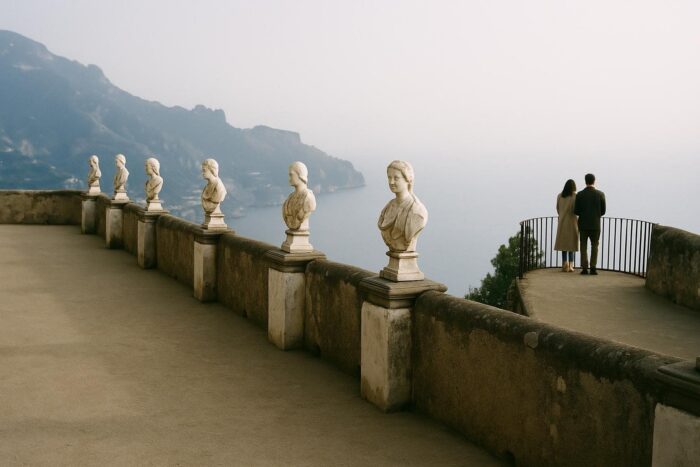
Ravello sits on a hilltop above Amalfi, removed from the bustle below. Its two great gardens are the draw: Villa Rufolo, next to the main square, and Villa Cimbrone, whose Terrace of Infinity looks straight down to the sea. In summer, the Ravello Festival holds concerts on the Belvedere of Villa Rufolo, with the 2026 edition running from early July to early September.
Praiano
Praiano, between Positano and Amalfi, receives far fewer day-trippers. Sunsets toward Capri are a highlight, especially from the terrace of the Church of San Gennaro, and it suits couples who want quiet evenings.
Getting There and Getting Around
Flying into Naples
Naples airport is the usual gateway. In the warmer months, United flies nonstop from Newark and Delta from New York JFK; both routes are seasonal, so check dates for your travel period. Otherwise, connect through Rome or another European hub. US citizens can stay in Italy without a visa for up to 90 days in any 180-day period, the EU’s Entry/Exit System registers your first entry, and the ETIAS authorization had not launched as of September 2026.
From the airport to the coast
A private transfer is the simplest option after a long flight. The Curreri coach runs from the airport to Sorrento, where you can continue by SITA bus or ferry, and the Alibus shuttle links the airport to Molo Beverello, the Naples port, for ferries to Capri and Sorrento.
Ferries and the SITA bus
Ferries are the most pleasant way to hop between towns. Travelmar connects Salerno, Amalfi, Positano and smaller towns, with its main season running from April to October and more departures from June. On land, SITA Sud buses run between Sorrento, Positano and Amalfi, and from Amalfi up to Ravello. Tickets are sold at tobacconists and newsstands, not on board, and summer buses are often full, so do not rely on them to catch a train or a flight.
Driving restrictions
Driving the SS163 is stressful and parking is scarce. In 2026, an alternating plate rule applies between Vietri sul Mare and Positano from 10 a.m. to 6 p.m.: on odd dates, cars with plates ending in an odd digit are banned, and on even dates those ending in an even digit. It runs on weekends and holidays in June, July and October, and every day in August and September. Hotel guests are exempt on arrival and departure days only. If you still rent a car, Italy requires an International Driving Permit alongside your US license.
A Day Trip to Capri
Capri is the classic boat day of an Amalfi Coast honeymoon. Ferries and hydrofoils from Positano and Amalfi generally run from April to October, while Naples and Sorrento have connections all year. Sailings can be canceled in rough seas, so keep the day flexible and avoid your last full day.
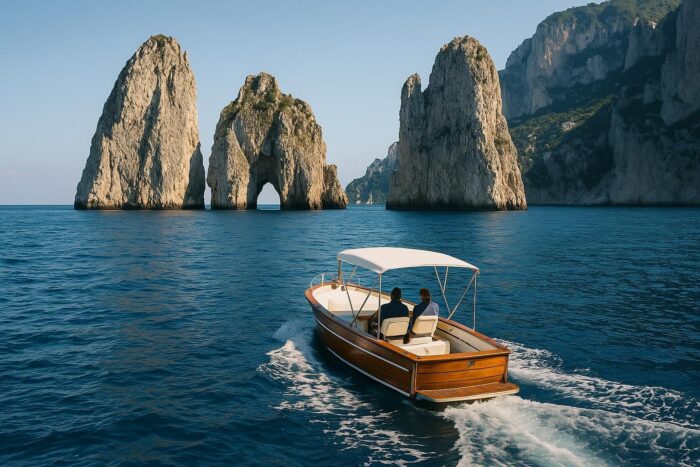
A private or small-group boat tour lets you circle the island, pass the Faraglioni rock stacks and stop for a swim. The Blue Grotto is entered by small rowboat and closes when the wind or sea is too strong, sometimes several times a day. On land, the Piazzetta in Capri town is the place for a drink, and the chairlift from Anacapri climbs Monte Solaro for a view over the whole bay.
Best Months for an Amalfi Coast Honeymoon
- May and June: warm, long days with lighter crowds than midsummer. The sea warms up through June.
- July and August: hottest, busiest and most expensive. Book early, and expect traffic and crowded buses.
- September: warm weather and sea, with crowds starting to thin. One of the best windows for a honeymoon.
- October: milder and calmer, but ferry schedules shrink and some hotels close from mid-October.
- November to March: many hotels, restaurants and beach clubs close, especially in Positano. Amalfi and Sorrento stay more active, but the sea is too cold for most swimmers.
Combining the Amalfi Coast with Rome or Sorrento
Rome pairs naturally with the coast. High-speed trains link Rome and Naples in about 1 hour 10 minutes, several times an hour, and you can continue by transfer or ferry. A common rhythm is two or three nights in Rome, then five on the coast, ending with a flight home from Naples or Rome.
Sorrento is not on the Amalfi Coast itself but faces the Bay of Naples on the same peninsula. It is easier to reach from Naples and has ferries to Capri all year, so some couples split their stay: a few nights in Sorrento, then a few in Positano or Ravello. If you are still weighing Italy against the islands, our guide to a honeymoon in Greece covers a different kind of seaside trip.
Where to Stay by Style
- Glamour and views: Positano, in a hotel with a terrace facing the town and the sea. Ask whether porters help with luggage on the steps.
- Romance and quiet: Ravello, in a historic villa hotel with gardens. Evenings are peaceful once day visitors leave.
- Easy logistics: Amalfi, close to the ferry pier and bus terminal, so every day trip starts on foot.
- Sunsets and privacy: Praiano, often in a small hotel or a villa rental with a private terrace.
For sea-view rooms between June and September, book several months ahead and check recent reviews for road noise.
Amalfi Coast Honeymoon FAQ
How many days do we need on the Amalfi Coast?
Five nights is a comfortable minimum, with time for a boat day, Capri, Ravello and a few slow days.
Do we need a car for an Amalfi Coast honeymoon?
No. Ferries, SITA buses and private transfers cover the main towns, and driving comes with plate restrictions, narrow roads and very limited parking.
Which town is best for a honeymoon?
Positano for glamour and views, Ravello for calm and gardens, Amalfi for easy transport and Praiano for sunsets and privacy.
Can we visit the Amalfi Coast in winter?
Yes, but many hotels and restaurants close from November to March, ferry service is reduced and the sea is too cold for swimming.