An Iceland honeymoon trades palm trees for waterfalls, black sand beaches, glaciers and warm geothermal water under an open sky. It suits couples who like to be outdoors during the day and slow down in the evening, whether that means a soak in a lagoon or waiting for the northern lights on a clear winter night.
This guide helps you choose between summer and winter, compares a South Coast trip with the full Ring Road, covers the Golden Circle, Snaefellsnes and the geothermal lagoons, and explains what to know about flights, entry rules, driving and volcanic activity before you book.
Why Iceland Works for Newlyweds
Iceland is closer than most couples expect, and small enough to see a lot without long transfers. You can walk behind a waterfall in the morning, watch icebergs drift in a glacier lagoon in the afternoon and end the day in a hot pool. Some couples rent a car and change country hotels every night or two; others stay in Reykjavik and join small-group tours.
Iceland is part of the Schengen Area. U.S. citizens can visit without a visa for up to 90 days in any 180-day period, with a passport valid at least three months beyond departure from the Schengen Area. The EU’s Entry/Exit System now registers non-EU travelers at the border, and the separate ETIAS travel authorization had not launched as of September 2026, so check its status again before a 2027 trip.
Summer Midnight Sun or Winter Northern Lights
The season is the biggest decision, because Iceland feels like two different countries depending on when you go.
| Season | Daylight | Highlights | Trade-offs |
|---|---|---|---|
| June to August | Around the June solstice, the sun sets only briefly in Reykjavik | Full Ring Road, hiking, highland roads open | Busiest and most expensive period; no northern lights |
| September to April | Around four hours of daylight near the December solstice | Northern lights, snowy landscapes, quieter sights | Storms can close roads; highland roads shut |
Summer and the midnight sun
With light almost around the clock, long driving days are easy and you can visit popular waterfalls late in the evening, after the tour buses have left. It is the only season when the full Ring Road and the interior are straightforward. Book cars and hotels early, because rural lodging is limited.
Winter and the northern lights
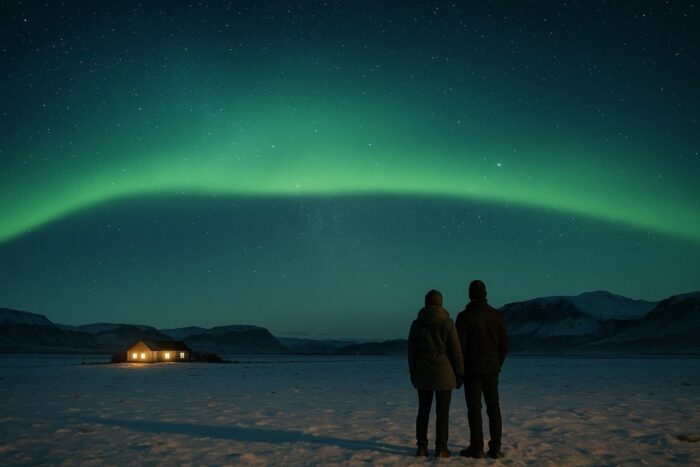
The northern lights are generally visible from early September to early April. You need dark, clear skies and some solar activity, so nothing is guaranteed. Spend several nights outside Reykjavik, away from city lights, to improve your chances. Late September to October and February to March combine dark nights with workable daylight.
Ring Road or South Coast: Choosing Your Route
The South Coast
For a honeymoon of about a week, the South Coast is the classic choice. Route 1 runs east from Reykjavik past Seljalandsfoss, where a path leads behind the waterfall, and Skogafoss, one of the country’s largest falls. Near Vik, Reynisfjara is the black sand beach with basalt columns and sea stacks. Keep well back from the water: sneaker waves can surge far up the beach without warning.
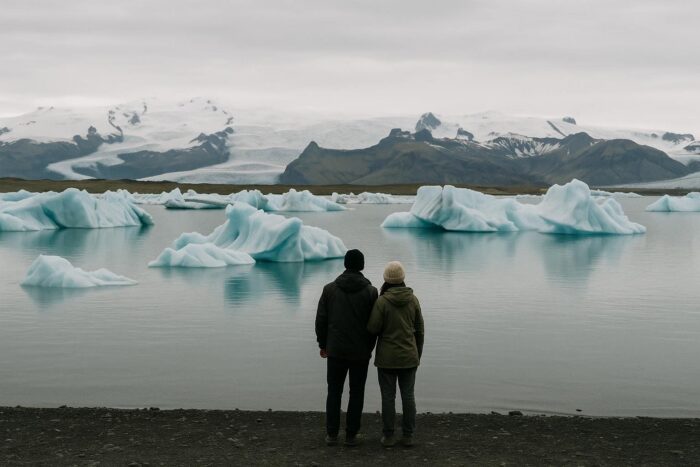
About five hours’ drive from Reykjavik, Jokulsarlon glacier lagoon sits at the edge of Vatnajokull National Park. Icebergs float across the lagoon and wash up on Diamond Beach, just across the road.
The full Ring Road
Route 1 circles the island for roughly 800 miles, adding the eastern fjords, the Myvatn area and the north around Akureyri. It is best driven from late spring to early fall, and you need at least ten days so the trip is not spent behind the wheel. In winter, storms can force changes of plan, so the South Coast is the safer choice.
Snaefellsnes Peninsula
Snaefellsnes, north of Reykjavik, is often called Iceland in miniature: the glacier-capped volcano Snaefellsjokull and its national park, sea cliffs and arches at Arnarstapi, fishing villages and the cone-shaped Kirkjufell mountain. It makes a quieter two- or three-day addition.
The Golden Circle and Geothermal Lagoons
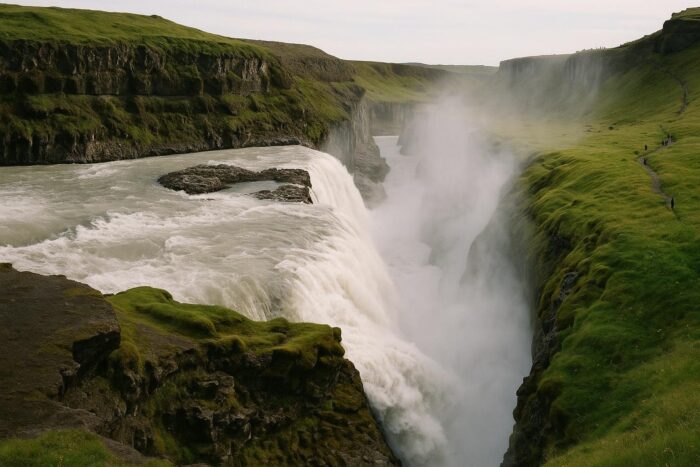
The Golden Circle is a loop in southwest Iceland that fits into a day from Reykjavik. Thingvellir National Park, a UNESCO World Heritage site, is where the North American and Eurasian plates drift apart and where Iceland’s early parliament met. At the Geysir geothermal area, Strokkur erupts every few minutes, and Gullfoss drops in two tiers into a deep canyon. Staying overnight on the route lets you arrive before the crowds.
Blue Lagoon
The Blue Lagoon lies on the Reykjanes peninsula about 20 minutes from Keflavik airport, an easy first or last stop. Beyond the lagoon it has a spa and two hotels, Silica and The Retreat, popular for a honeymoon night. It has closed for short periods as a precaution during nearby volcanic activity, so check its status close to your visit.
Sky Lagoon
Sky Lagoon, in Kopavogur about 15 minutes from central Reykjavik, has an infinity edge facing the North Atlantic and a seven-step ritual with a cold plunge, sauna, steam room and body scrub.
Driving in Iceland: What You Need to Know
- Check conditions every day. Road conditions and closures are on road.is (now umferdin.is), and weather changes fast, especially in winter. Safetravel.is lists alerts and lets you register a travel plan.
- F-roads are for 4x4s only. Highland roads marked with an F are usually closed from mid-September until June or July, and river crossings are not covered by rental insurance.
- Never drive off-road. Leaving marked roads and tracks is strictly forbidden.
- Stop only where it is safe. Use marked parking areas, not the shoulder, for photos.
- Slow down on gravel and at single-lane bridges. The first car to reach the bridge has the right of way, and headlights must always be on.
If neither of you is comfortable on ice and snow, a winter base in Reykjavik with guided tours, including northern lights trips, is a relaxed alternative.
Volcanic Activity on the Reykjanes Peninsula
The Reykjanes peninsula, between Reykjavik and the airport, has been volcanically active since 2021, with a series of eruptions along the Sundhnukur crater row near Grindavik. The most recent one ended in August 2025. As of September 2026, no eruption was underway, but the Icelandic Meteorological Office reported that magma was still accumulating beneath Svartsengi and that a new event on the crater row remained the most likely scenario, with no way to predict when.
During past eruptions, flights at Keflavik kept operating and the rest of the country was unaffected; the impact for visitors was temporary closures of roads, viewing areas and sometimes the Blue Lagoon. Check the Icelandic Meteorological Office and safetravel.is before you travel and follow local instructions.
Flights to Keflavik and the Stopover Option
Icelandair flies nonstop to Keflavik from many U.S. cities. Boston, Chicago, Denver and Seattle are served year-round, and New York JFK, Newark and Washington Dulles also have regular service. Routes such as Nashville, Pittsburgh, Portland and Miami are seasonal. Delta and United fly nonstop from some of their hubs, mostly in summer. Schedules change every year, so confirm your route when you book.
If you continue to mainland Europe with Icelandair, its Stopover program lets you spend up to seven nights in Iceland at no additional airfare, longer on Flex fares; hotels and tours are booked separately. A few days in Iceland on the way to Paris or Rome turns one trip into two, and our guide to romantic places to honeymoon in Europe can help you choose the second half. Pack warm, waterproof layers even in July; our advice on what to pack for your honeymoon covers cooler destinations.
Iceland Honeymoon FAQ
What is the best time for an Iceland honeymoon?
June to August for long days and the full Ring Road; September to April if the northern lights matter most.
How many days do you need in Iceland?
About a week covers Reykjavik, the Golden Circle and the South Coast to Jokulsarlon. Plan at least ten days for the full Ring Road.
Do U.S. citizens need a visa for Iceland?
No. Iceland is in the Schengen Area, so you can stay up to 90 days in any 180-day period.
Is it safe to visit Iceland with the volcanic activity?
Yes, for most travelers. Activity has been limited to a small area of the Reykjanes peninsula, and flights kept running during past eruptions. Check official updates before you go.