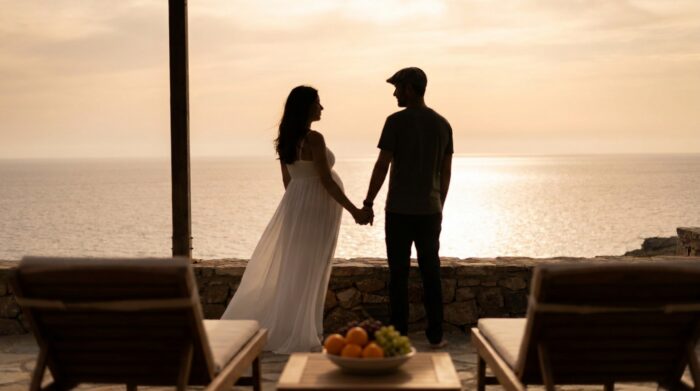
The best babymoon destinations share three things: they are easy to reach, they have good medical care nearby, and they let you slow down without feeling stuck. A calm beach, a walkable city with great food or a cabin in the woods can all work, as long as the trip fits the way your body feels in the middle of a pregnancy.
Below you will find babymoon places sorted by style, the criteria that matter more now than on any other trip, and the seasons that suit each destination. Talk to your OB or midwife before you book anything, especially if you plan to fly.
How to choose a babymoon destination
A babymoon is not the time for a bucket-list adventure. The good babymoon destinations are the ones that remove friction. Four criteria do most of the sorting.
Travel time
Long flights mean long hours of sitting, swollen ankles and a higher risk of blood clots. The CDC recommends that pregnant travelers stay hydrated, stretch often, walk the aisle and wear graduated compression stockings on long trips. A destination within a short flight or a few hours’ drive keeps the trip restful from the first day. Most commercial airlines let pregnant passengers fly until 36 weeks, but some restrict international flights earlier, so check your carrier’s rules before you pick a date.
Access to medical care
Complications are rare in a healthy pregnancy, but you want a hospital with a maternity unit within reasonable reach. That favors cities, well-developed resort areas and places at home over remote islands or backcountry lodges. If you leave the country, the CDC advises pregnant travelers to strongly consider travel health insurance that covers pregnancy-related problems and newborn care, along with medical evacuation coverage. Many standard health plans do not cover care abroad.
Zika and other mosquito-borne risks
Zika infection during pregnancy can cause serious birth defects. The CDC’s current advice is that pregnant women should reconsider travel to areas with a Zika outbreak, and it publishes an up-to-date map and travel health notices. Check it for any tropical destination, including parts of the Caribbean, Latin America, Southeast Asia and the Pacific, before you put down a deposit. Even where there is no outbreak, pack an EPA-registered repellent and favor air-conditioned rooms.
Heat, altitude and food
The CDC notes that a raised body temperature during pregnancy has been linked to birth defects, and it advises limiting activity in hot environments. A shaded beach in a mild month beats a desert in July. For mountain trips, a slow ascent with time to acclimatize is the rule. Abroad, choose places where bottled water and well-cooked food are easy to find.
Best babymoon destinations by style
Here is a quick overview of the best babymoon locations by travel style, followed by details on each.
| Style | Example destinations | Best season | Why it works |
|---|---|---|---|
| Beach | Maui, Southern California, the Florida Gulf Coast | Spring and fall | Warm water, easy days, US medical care |
| City | San Francisco, Charleston, Montreal, Lisbon | Spring and fall | Great food, short walks, plenty of rest stops |
| Nature | Asheville and the Blue Ridge, Sonoma County, coastal Maine | Late spring to early fall | Scenery without strenuous hikes |
| Wellness | Hot springs towns, spa resorts with prenatal treatments | Year-round | Massage, pools, quiet |
Beach babymoons
A beach is the classic choice, and for good reason: lying under an umbrella and floating in calm water is about as gentle as a vacation gets. Hawaii, and Maui in particular, is one of the best places for a babymoon for West Coast couples, with a five-to-six-hour flight and no passport. Southern California offers mild weather most of the year and an easy drive for many families. On the East Coast, the Florida Gulf Coast has calm, shallow water and quiet towns, at its best in spring and late fall when the summer heat eases.
If you dream of the Caribbean or Mexico, read the CDC’s Zika notices first and choose a resort with a nearby hospital rather than a remote island. Skip scuba diving, which the CDC says is best avoided during pregnancy. Snorkeling at the surface is a gentle alternative.
City babymoons
Cities make surprisingly good babymoon spots. You get restaurants, museums and shopping, and you can head back to the hotel for a nap whenever you like. San Francisco and its mild climate, Charleston with its historic streets and porches, or Montreal for a taste of Europe a short flight away are all easy wins. Further afield, Lisbon and Barcelona combine great food, sunshine in spring and fall, and modern hospitals. Pick a central neighborhood so walks stay short, and plan one or two highlights a day, not five.
Nature and countryside escapes
A cabin, a vineyard region or a small coastal town gives you fresh air and slow mornings. The Blue Ridge Mountains around Asheville, North Carolina, offer scenic drives and short trails. Sonoma County works even without wine tasting, with farm-to-table food and redwood groves. Coastal Maine in summer brings lighthouses and cool sea air. Keep hikes short and flat, and choose a base within reach of a regional hospital.
Wellness and spa getaways
Some couples simply want to rest. Spa resorts with prenatal massage, quiet pools and good room service can turn a long weekend into a real recharge. Ask before booking which treatments are offered to pregnant guests: many spas skip hot stones and some body wraps, and hot tubs and saunas raise body temperature, so most providers will steer you away from them.
When to go: the season matters twice
Timing a babymoon means thinking about two calendars. The first is your pregnancy. The CDC notes that the risk of obstetric complications is greatest in the first and third trimesters, which is why many couples travel in the second, once morning sickness has faded and before moving around gets harder. Your provider will tell you what fits your situation.
The second calendar is the destination’s. A beach that is perfect in April can be stifling and stormy in August, and the Atlantic hurricane season runs from June through November. Mild shoulder seasons, spring and fall in most of the US and Europe, tend to be ideal: comfortable temperatures, thinner crowds and often lower rates.
Babymoon getaways and anniversary trips
A babymoon often overlaps with another milestone, like a first or second wedding anniversary, and many couples combine the two. If that is your case, browse our favorite anniversary getaway ideas and keep only the options that pass the pregnancy filters above: short travel time, good care nearby, no Zika outbreak and a mild season.
Babymoon packing checklist
- A copy of your prenatal records and your provider’s contact details
- Your health insurance card and, abroad, your travel medical policy
- Compression socks for the flight or drive
- Insect repellent safe for pregnancy and a refillable water bottle
- A pregnancy pillow, or a request for extra pillows at check-in
- Loose, breathable clothes and comfortable walking shoes
FAQ about babymoon destinations
What is the best place for a babymoon?
The best place is one you can reach in a short trip, with good medical care nearby and a mild season at the time you travel. For many US couples, that means Hawaii, California, the Southeast or a nearby city.
Is it safe to go abroad on a babymoon?
For a healthy pregnancy, international travel is usually possible with your provider’s approval. Check the CDC’s Zika map, your airline’s pregnancy policy and buy travel health insurance that covers pregnancy.
How long should a babymoon be?
Three to seven nights is a comfortable range. A long weekend is enough if you stay close to home; a week makes sense when the trip involves a longer flight.
Can we go to the Caribbean or Mexico while pregnant?
It depends on current Zika activity. The CDC advises pregnant women to reconsider travel to areas with an outbreak, so check its travel notices for the exact island or region before booking.