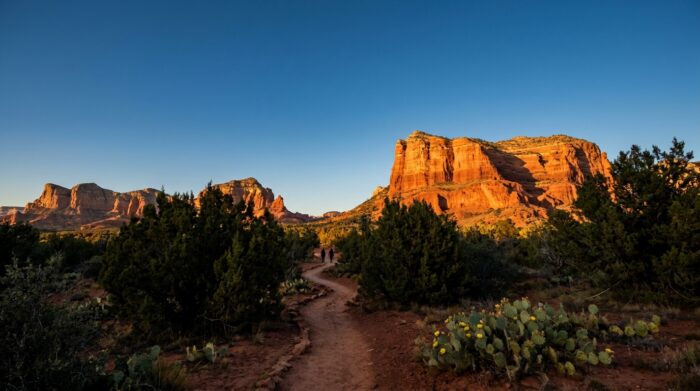
A Sedona babymoon trades beach umbrellas for red rock buttes, clear desert light and some of the most dramatic sunsets in the Southwest. It is a calm, scenic place to rest before baby arrives, as long as you plan around two things: heat and elevation.
Sedona sits at about 4,360 feet, high enough to notice on a hike but far below the altitudes that worry most travelers. This guide covers easy walks, spa time, when to go and how to pace your days.
Why Sedona for a babymoon
Sedona offers something rare among relaxing getaways: big landscapes you can enjoy without much effort. Many of the famous formations are visible from roadside pullouts, viewpoints and short paths. The town has a strong wellness culture, with spas, yoga studios and quiet resorts tucked into the canyons, so slowing down feels natural here.
It is also an easy domestic trip. Phoenix Sky Harbor International Airport is about 119 miles away, a drive of around two hours, and Flagstaff’s small airport is closer. If you are still weighing desert against beach, our guide to a stateside babymoon compares Sedona with coastal and mountain options across the country.
Easy red rock walks
Choose flat or gently rolling paths, start early, and turn around while you still feel fresh. Some favorites for an easy pace:
- Bell Rock Pathway: a wide, mostly level trail with close views of Bell Rock and Courthouse Butte. Walk as far as you like and head back.
- Red Rock Crossing area: a short stroll along Oak Creek with the classic view of Cathedral Rock reflected in the water.
- West Fork of Oak Creek: a shaded canyon walk north of town, cooler than the open desert in warm months. It involves creek crossings on stones, so go only as far as feels steady.
- Airport Mesa viewpoint: a quick drive up for wide sunset views without a hike.
Skip steep scrambles such as the climb up Cathedral Rock, which uses rock slabs and handholds. Balance shifts during pregnancy, and a fall on slickrock is not worth the photo. Some trailheads require a parking pass, so check signs before you leave the car.
Scenic drives and sights
The Chapel of the Holy Cross, completed in 1956, rises out of a red rock cliff and is reachable with a short, steep ramp from the parking area. The drive up Oak Creek Canyon on Route 89A is one of the prettiest in Arizona and can be done entirely from the car, with stops at overlooks.
Spa days and slow afternoons
Many Sedona spas offer prenatal massage, usually from the second trimester onward. When booking, ask that the therapist be trained in prenatal techniques and mention how far along you are. Skip hot tubs, saunas and heat wraps, and choose gentle treatments such as a prenatal massage, a hydrating facial or a foot treatment.
Afternoons are for resting. Read on a shaded patio, browse galleries, take a slow lunch, and save your energy for sunset. Stargazing is another quiet pleasure: Sedona works hard to keep its night skies dark.
Heat and altitude precautions
The CDC notes that pregnant travelers can develop heat illness sooner than other travelers. In Sedona, average highs reach about 94°F in June and 97°F in July, and July and August bring monsoon storms with sudden rain. Simple rules help:
- Carry more water than you think you need, plus a salty snack.
- Walk early in the morning and rest indoors in the afternoon.
- Wear a hat, sunscreen and breathable layers.
- Stay out of washes and slot canyons when storms are forecast.
- Know the signs of heat illness, such as dizziness, headache or nausea, and seek care quickly.
On altitude, the CDC says there are no studies showing harm from short trips to high elevation, but it recommends a slow ascent and avoiding strenuous high-elevation activities you are not used to. At about 4,360 feet, Sedona is moderate. Flagstaff, by contrast, sits near 7,000 feet, so if you plan a side trip there or to the Grand Canyon’s rims, ask your provider first and take it easy on arrival. Breathlessness on hills is normal; chest pain or severe headache is not.
Best time for a Sedona babymoon
| Season | Average high | For a babymoon |
|---|---|---|
| March-April | About 68-75°F | Ideal: mild days, wildflowers, busy weekends |
| May | About 84°F | Good, with early-morning walks |
| June-August | About 94-97°F | Hot, monsoon storms from July; least comfortable |
| October-November | About 67-79°F | Excellent: warm days, cool nights, fall color in Oak Creek Canyon |
| December-February | About 58-61°F | Quiet and crisp, near-freezing nights |
Temperatures come from long-term averages for Sedona. Spring and fall are the clear winners, and they line up nicely with a second-trimester trip if you plan ahead.
Make it a celebration
A babymoon often doubles as an anniversary trip, especially when the wedding date falls during the pregnancy. For more ways to mark the day together, browse our ideas for celebrating every anniversary on the road.
Sedona babymoon FAQ
Is Sedona’s altitude safe during pregnancy?
At about 4,360 feet, Sedona is a moderate elevation. The CDC reports no evidence of harm from brief high-elevation trips, but ask your provider, pace yourself and stay hydrated.
How many days should we plan?
Three to four nights allow a couple of easy walks, a spa morning and a few sunsets without rushing.
What is the closest major airport?
Phoenix Sky Harbor, about 119 miles away. Flagstaff’s airport is closer but has fewer flights.
Can I get a massage while pregnant in Sedona?
Many spas offer prenatal massage, typically from the second trimester. Mention your pregnancy when booking.